

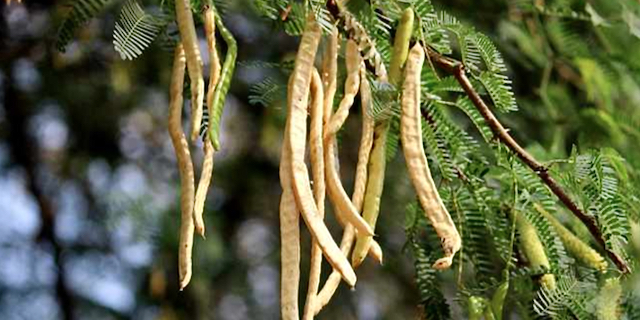
I just returned from a trip to Arizona. I am always struck by the beauty of the Sonoran Desert but also aware of how hot it can get even in spring and how the superheated concrete in cities like Phoenix, can get unbearable. That anything can live and grow in such an environment is amazing. The good news is that cities are working on initiatives to bring some natural cooling (not just indoor air conditioning) to the hot cities of the Southwest.
For example, Tucson pledged to plant 1 million trees by 2030 to shade the sidewalks and cool the city. In addition, Brandon Merchant, a local urban farm manager, wants to plant not just any trees in Tucson but Mesquite trees because in addition to shade and cooling, they are a food source.
Mesquites are adapted to the hot Sonoran Desert climate and thrive in this weather. They have been a food source for Native Americans of the region for centuries. Brandon Merchant is working in a broad community effort including a high school, a community farm, the Tohono O’odham tribal nation, and the food bank to plant thousands of Mesquites to cool and feed people.
I am very intrigued by his project. I know about Mesquite trees from many trips to the deserts in the Southwest, but I didn’t know that the pods were edible. When I read that pods and beans can be ground into flour for various culinary uses, the article had my undivided attention. Of course, I had to get my hands on some Mesquite flour and try it for bread.
The flavor is described as having notes of hazelnut, cinnamon, cocoa, and molasses that deepen with cooking. Additionally, mesquite flour is gluten-free, and rich in proteins, magnesium, calcium, potassium, iron, and zinc. It also contains lysine, an essential amino acid, and has a low glycemic index with a high fiber content.
I am not sure that it can be our new backyard tree and food source in coastal California since we likely don’t have the right climate, but I could be wrong.
In the meantime, I bought a pound of the Mesquite flour online and will use it in recipes for regular wheat-based sourdough bread and gluten-free sourdough bread.
I received the flour today and will share updates on how it turned out soon.